The Project
Trilogy was engaged by a geotechnical partner firm to provide specialist geotechnical reporting and analysis for a utility-scale solar farm investigation in regional New South Wales. Fieldwork and laboratory testing had been undertaken by the partner firm; Trilogy's role was to independently assess and interpret the investigation data and deliver the interpretive geotechnical report — including a critical review of an earlier investigation by another firm that contained internal inconsistencies and unsupported findings.
The proposed development comprised a utility-scale solar farm and associated infrastructure, including solar panel arrays on piled foundations, transformer and inverter stations, internal access tracks, perimeter fencing, and an access road upgrade.
Design solar pile foundations in Class E (Extremely Reactive) black clay — where the ground moves up to 120 mm seasonally — while navigating an existing investigation with unreliable pile capacity parameters that had to be critically reviewed before any new analysis could proceed.
The Ground
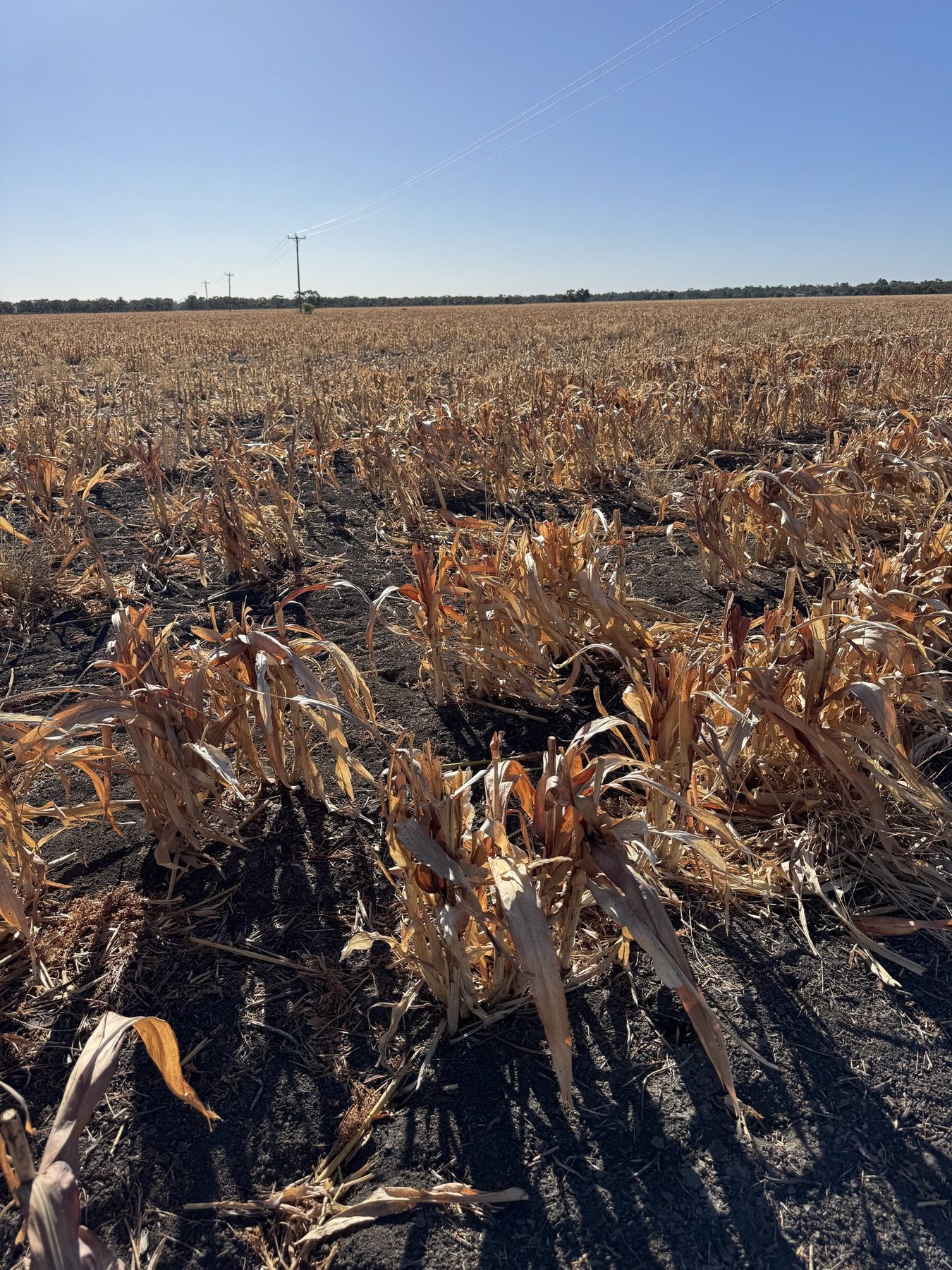
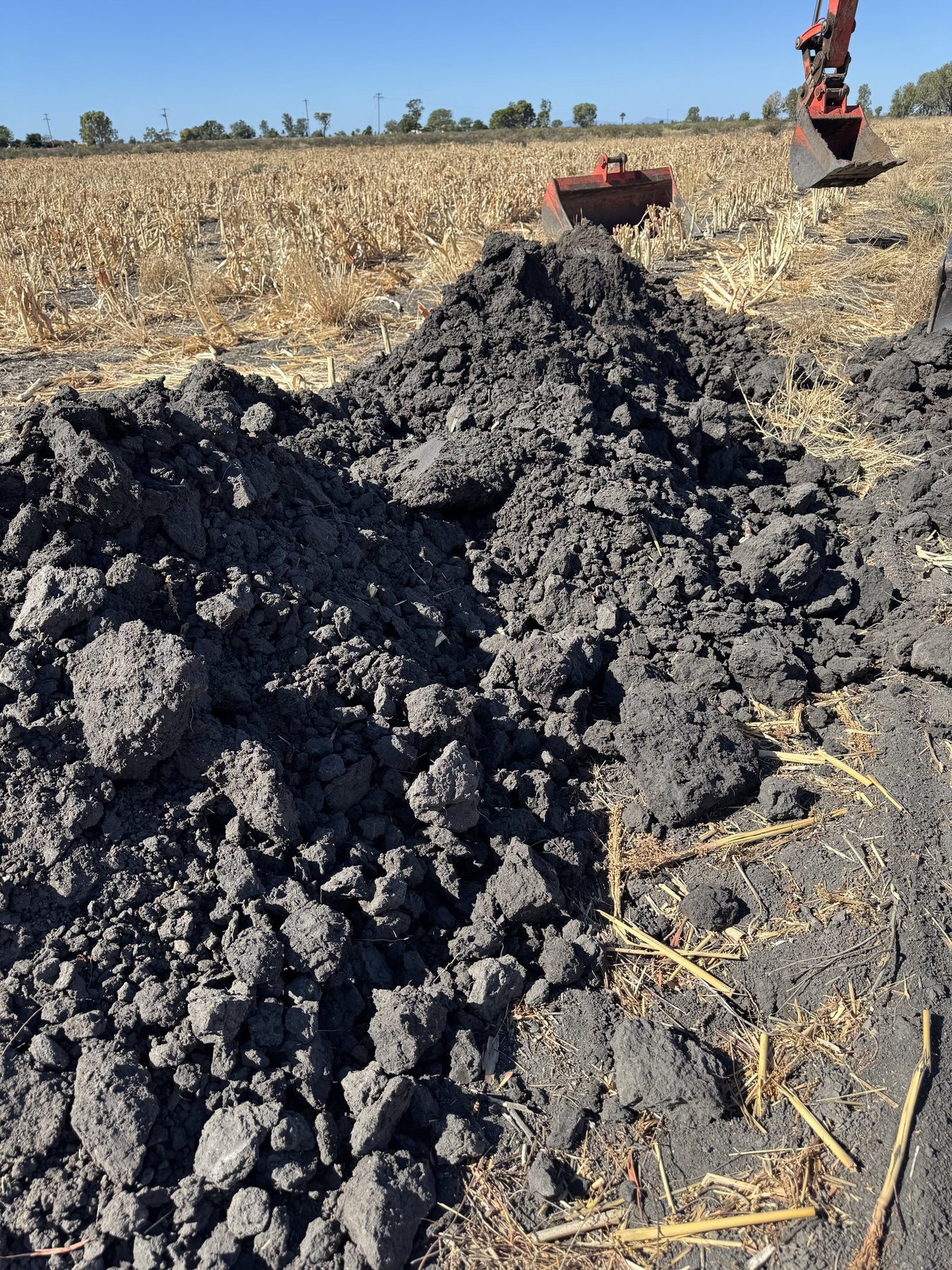
The site is underlain by vertosol-type black soils — the Marra Creek Formation — some of the most reactive clays in Australia. The investigation confirmed this emphatically:
- Plasticity indices of 49–60%, liquid limits of 68–81% — firmly CH (high plasticity clay)
- Linear shrinkage of 20–28%, indicating severe volume change potential
- Characteristic surface movement (Ys) of 110–120 mm — consistent with Class E (Extremely Reactive) under AS 2870:2011 guidance
- A desiccated crust identifiable in DCP profiles to 0.8–1.2 m depth — the classic black soil signature
- Field evidence of shrink–swell: leaning powerline poles along the site boundary
- Subgrade CBR values of <2% in natural clay
- Moderate to severe steel aggressivity conditions relevant to pile corrosion protection
Pile Design in Reactive Clay
The reactive zone is the critical design constraint for solar array piles. Shaft resistance within the seasonally active zone — the depth over which shrink–swell occurs — cannot be relied upon for long-term pile capacity due to seasonal moisture cycling, desiccation cracking, and potential uplift. Trilogy conservatively excluded the upper clay unit (Unit B, 0–1.0–1.2 m) from positive shaft resistance entirely.
Pile capacity was derived primarily from Unit C — the deeper, stiffer alluvial clay below the active zone — with preliminary design parameters developed for feasibility-level assessment to AS 2159:2009:
- Ultimate unit shaft resistance (Unit C): 50 kPa
- Ultimate unit end bearing (Unit B): 400 kPa; Unit C: 900 kPa
- Geotechnical reduction factors (φg): 0.45–0.65 for shaft; 0.40–0.60 for end bearing
- Design must address seasonal uplift and downdrag, lateral wind loading, reduced near-surface stiffness, and corrosion protection
Outcomes
- Class E reactive classification confirmed with explicit acknowledgement of AS 2870 applicability limits for solar infrastructure
- Preliminary pile capacity parameters derived for feasibility assessment — providing an independently defensible basis for the structural engineer
- Pavement and earthworks recommendations developed for highly reactive (<2% CBR) subgrade conditions
- Earlier investigation critically reviewed and its pile capacity parameters set aside — avoiding reliance on unsupported findings in the detailed design